
- 3X Faster Organic SEO Services
RANK ON THE FIRST PAGE OF GOOGLE



DIREWOLF SEO
Partner with the leading Organic SEO Agency in the UK


Be Where People Actually Click.
When you need a leak fixed, you go to Google and search for "plumber near me." You click on the first website that you see. Then, you go back and click on the next two websites to compare. And finally, you call one of them to book an appointment.
That's exactly how people search when they need your services. And if your website doesn't show up, no one will know that your business exists, even if your service is excellent.
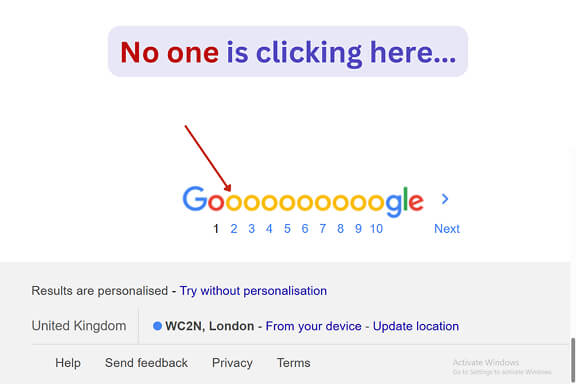
95% of searchers never scroll past page one.
The top 3 organic results capture over 68% of all clicks, while the paid ads above them are ignored by most users within seconds.
We build long-term, performance-driven organic SEO campaigns that engineer ROI, instead of chasing meaningless rankings.
Our UK Organic SEO Service is built around results, not retainers
If you’re paying for website SEO services, you should see what you’re paying for. In your analytics, in your pipeline, and on your balance sheet.
We’ve helped businesses across the UK, from boutique law firms to nationwide service brands, climb from obscurity to authority.
Why traditional SEO fails modern businesses
We’ve seen the pattern one too many times: a business pours money into SEO, months go by, and the needle barely moves.
No clarity or accountability. Just “it takes time.”
While it’s true that SEO takes time, that’s no justification for stagnation. Weeks turn into months, and the marketing spend becomes harder to justify without visible progress. At Direwolf SEO, we reject that old model. Traditional SEO is dead, not because the fundamentals have changed, but because the market has.

Slow SEO simply can’t keep up
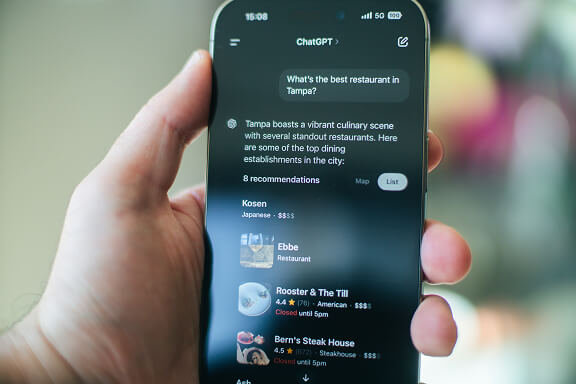
Search is faster, competition fiercer, and algorithms smarter than ever.
That’s why we’ve rebuilt the whole SEO process. Our next-gen strategies are designed to collapse the time between launch and lift-off. With us, you don’t get excuses that quietly drain your budget.
We engineer fast, early wins that prove the process works. So, you see traction, feel momentum, and want to keep scaling with us to multiply what’s already working.
WE TAKE THE “RISK” OUT OF SEO
YOU’RE BACKED UP BY TWO GUARANTEES
YOU’RE BACKED UP BY TWO GUARANTEES
(No SEO agency in the UK guarantees anything)

We’ll rank your website on Google’s first page within 90 days. If we don’t get you there, we’ll keep working at no cost until we do.
You’ll start seeing your website move up on Google within the first 30 days. If your rankings don’t move up in 30 days, we’ll refund you in full.
What Brings You Here?
Every business comes to SEO with different goals.
Some want to recover from traffic drops. Others want to scale, expand, or simply know their marketing is working. Wherever you are, we build a strategy that matches your intent.
We optimise for the metrics that you care about, such as leads, calls, and qualified enquiries, and align every SEO action with your business goals.
We optimise your local citations, GBP profile, and on-site signals to dominate your service area.
We analyse historical data, competitors, and intent shifts to identify exactly where growth is stuck, and what needs to change.
We’ll show you what we’re doing, why we’re doing it, and what impact it is having.

“Do I really need organic SEO for my website? Is SEO worth it anymore?”
Valid questions. And the answer is quite simple. Organic search is just as relevant for businesses today.
In fact… more.
Organic SEO is what makes or breaks visibility in the modern internet economy. You could be a law firm in London or a dental practice in Manchester; one fact holds true across industries:
Every qualified customer starts with a search.
However, in the UK, everyone’s fighting for the same digital real estate.
Competitors are producing AI-written content at scale, Google is rewriting rules every few months, and your website is being judged by hundreds of unseen signals every second.
DIREWOLF SEO
Without strategic organic SEO, you don’t stand a chance against companies that invest properly. And doing it “right” doesn’t mean chasing backlinks or stuffing keywords anymore.
Sustainable Growth Starts with 3X Faster Organic SEO
Organic SEO, when done right, doesn’t simply grow traffic.
It builds momentum. Momentum that compounds. That scales. That turns late-night searches into signed retainers, booked calls, and measurable business growth.
Organic SEO, in its truest form, is all about building a sustainable acquisition engine, one that generates demand while you sleep.
That’s what our SEO services for organic traffic mean: creating systems that continue to perform long after the campaign starts paying for itself.
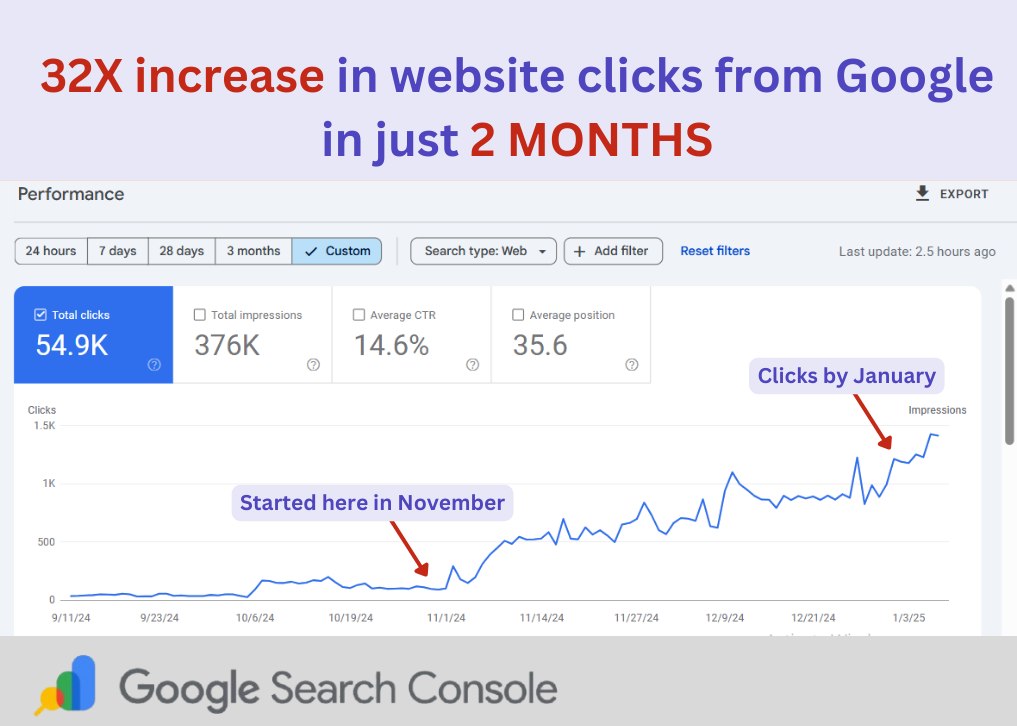
DIREWOLF SEO
Here’s what that looks like in practice
Getting the right people to your website
Ranking for money keywords all the way
An elevated brand authority

Predictable inbound enquiries
With our high-impact strategy, we confidently promise you visibility that leads to what matters most to businesses: High-quality leads and growing ROI. We get you those sweet, first-page rankings. Rankings drive opportunity. And opportunity drives sales.
Adapting to Google’s Ever-Changing Algorithm
If you’ve been in business long enough, you’ve probably felt it. Traffic drops overnight. Leads slow down. Rankings shuffle. That’s Google, and it doesn’t care how long you’ve been around.
Algorithm changes can reward you or wreck you. That’s why our campaigns are made to adapt and maintain performance no matter what changes Google makes.
Here’s how we stay ahead:
We optimise for the metrics that you care about, such as leads, calls, and qualified enquiries, and align every SEO action with your business goals.
We optimise your local citations, GBP profile, and on-site signals to dominate your service area.
While competitors panic after every update, our clients stay calm. Because they’re covered.
WHAT IS INVOLVED IN ORGANIC SEO?
SEO is a system of many moving parts. Every part plays a role in how Google perceives and rewards your site.
Keyword Research - Competitor analysis - SEO Strategy - On-page SEO - Technical SEO - Off-page SEO
Which keyword is supposed to be optimised from which page, which URL is supposed to be the parent to x number of child pages, what other pages we can build to target all the different ways people are searching for your service?
What's the meta title, meta description, H1 heading? Do we have FAQs? Is the content helpful? What's the interlinking map like?
Can Google "crawl" your website? Is it "indexed" by Google? What's blocking it?
And the list goes on...
Making Assumptions in SEO is a BIG Mistake
That's why we are big on data at Direwolf SEO.
We make audits that cut to the bone.
In our experience, the issue isn’t usually “bad SEO.” It’s fragmented SEO, which can look anything like optimising content without fixing the crawl path, or chasing backlinks while the site loads in 6 whole seconds.
Why Our Campaigns Scale FASTER
When we take on your campaign, we re-engineer your online presence as a living ecosystem: technical health, semantic content structure, and authority signals all feed into each other.
This is what full-stack SEO looks like when done properly.
And it’s also why our campaigns scale faster: because we build systems that compound.
Technical audits to fix crawl errors, indexation issues, and broken architecture.
Deep keyword mapping based on intent, not vanity.
Optimised meta structures, headings, and schema.
Internal linking strategies that build topical authority and direct PageRank flow.
UX optimisation: because even the best content fails if users bounce.
Backlink strategies rooted in relevance, not spammy link farms.
Digital PR placements that actually move your E-E-A-T (Experience, Expertise, Authority, Trust).
Competitor link analysis to uncover what’s powering their visibility.
Citation management for local SEO (essential for London businesses and service areas).
Cluster-based content planning built from your industry’s search behaviour.
Editorial calendars tailored to seasonal demand and commercial intent.
Real content written by people who understand your industry, not churned out by AI.
Structured internal linking and schema to help Google understand context and relevance.
Weekly monitoring of rankings, CTRs, engagement, and conversion metrics.
Adjusting to algorithm updates as they roll out.
Clear, transparent reporting that actually means something to your bottom line.

It's just not that hard to do something you've promised.

You're backed up by two SEO guarantees. It's a low-risk, high-reward parternship.

We first understand your business, and then find converting keywords to target.
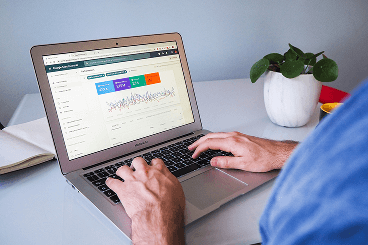
You won't find any meaningless graphs in our reports. Only valuable insights.

Want to discuss your SEO report? Got a question? We respond within 30 minutes.

We don't chain you to 6- or 12-month contracts.

Rick U.

Samantha W.

Erin B.
FREQUENTLY ASKED QUESTIONS ABOUT ORGANIC SEO
At Direwolf SEO, we welcome every question and challenge because we believe in what we do. Here’s how we address questions every UK business should ask before choosing an organic SEO partner in London or across the UK. If you still can’t find the answer you’re looking for, just contact us!
General FAQs About Organic SEO
Unlike paid advertising, organic SEO is a long-term strategy that brings visitors to your website without having to pay for every single click that you get from Google. It involves conducting keyword research, publishing high-quality content, improving the website’s technical structure, and building backlinks.
This helps your website show up on Google, leading people to your website who are further along in their buying journey than someone searching for general terms like “laws about divorce in London, UK”
If we’re talking about one of the busiest cities in the UK, such as London, the SEO landscape is highly competitive for law firms, dental clinics, healthcare and financial services especially. So a little bit of patience with aggressive, intelligent execution is important.
At Direwolf SEO, we consistently outperform industry averages with advanced on-page systems, proprietary link frameworks, and performance guarantees that most agencies avoid making. Our clients typically start seeing ranking jumps within 30 days and 1st page rankings within the first 60 to 90 days, with ROI scaling steadily thereafter.
For smaller, local campaigns (for example, a single-location dentist or solicitor), pricing generally starts around £1,000 to £2,000 per month. For competitive industries or multi-location campaigns, a serious SEO programme with technical optimisation, content production, and link acquisition usually costs £3,000 to £6,000 per month.
At Direwolf SEO, we don’t use one-size-fits-all pricing. We assess your site’s current authority, your competitive gap, and your growth targets, then quote based on what’s actually needed to produce results.
The key takeaway, however, is that cheap SEO is expensive in the long run. Proper SEO requires strategy, senior expertise, and consistent execution, and when done right, it pays for itself many times over in long-term ROI.
At Direwolf SEO, we build SEO systems that compound: content that earns clicks, backlinks that build authority, and visibility that drives qualified leads.
In competitive UK markets like London, strong organic presence is often the difference between being found and being forgotten.
Even though we get results from SEO much faster than the industry averages, it’s not a replacement for other types of marketing channels. All of them are important and have their own pros and cons. A good marketing strategy is a mix of short-term traffic from paid campaigns and long-term growth from organic SEO.
It’s a long-term process that combines technical fixes, content strategy, and authority building to improve your rankings in the unpaid (organic) search results.
London is one of the most competitive digital markets in the world. Paid ads are expensive and vanish the second you stop paying. Organic SEO, on the other hand, builds long-term visibility that keeps generating leads and revenue without constant ad spend.
For small businesses, a smart, well-managed SEO strategy can help you:
- Compete directly with bigger players through organic SEO strategies backed by data patterns.
- Get consistent inbound leads from customers who are already searching for your services.
- Build credibility and brand trust through repeated organic exposure.
- Reduce dependency on paid ads over time, freeing up your budget for growth.
- Consistent Visibility and Lead Flow: Once you rank, you stay visible 24/7 without ongoing ad spend. That consistency compounds brand awareness and inbound leads.
- Credibility and Trust: London customers are more likely to trust businesses that appear naturally in search results rather than sponsored ones.
- Local Market Edge: SEO tailored to London’s geography and audience positions you to capture clients from high-value local searches (e.g., “family lawyer in Mayfair” or “private dentist in Kensington”).
- Higher ROI Over Time: Unlike paid ads that stop performing when the budget stops, organic rankings continue to deliver traffic for months or years with ongoing optimisation.
Organic SEO turns your website into an always-on acquisition machine, bringing qualified clients directly to you, without constant paid spend.
Organic SEO, on the other hand, keeps performing long after the campaign ends.
FAQs About Organic SEO Implementation
- Audit your site: Identify crawl issues, broken links, and thin content.
- Optimise content: Align pages with search intent, integrate relevant keywords naturally, and improve readability and user value.
- Build authority: Earn quality backlinks and citations from other high-authority websites.
- Improve UX: Fast, mobile-friendly, and conversion-focused pages rank better.
- Add more helpful content: Regularly update your website with fresh content that answers people’s questions — either through blog posts or revamped landing pages.
Or skip the trial and error altogether. Direwolf SEO builds complete organic SEO systems that fix weaknesses and scale strengths.
- Publish valuable, keyword-optimised content consistently.
- Earn backlinks from relevant, trusted sites.
- Fix technical issues fast.
- Track and adapt to Google’s algorithm shifts.
Or, if you prefer predictable growth without guessing, partner with an SEO agency that specializes in organic SEO services.
Focus on creating content that naturally earns links: research-driven studies, in-depth guides, and expert insights that people want to reference. Work on building relationships with authoritative sites in your industry through thoughtful outreach, guest contributions, and digital PR campaigns.
Also monitor where your competitors are getting links, identify gaps, and target opportunities where your content adds unique value. Over time, this approach builds a strong, sustainable backlink profile that improves rankings and credibility.
At Direwolf SEO, we use real search behaviour data from Google Search Console, not just keywords from SEO tools. That’s how we find high-impact opportunities others miss.
At Direwolf SEO, our clients see returns because we focus on revenue-generating visibility, not vague promises or “brand awareness.” Every decision we make is backed by intent data, competition analysis, ROI forecasting, and continuous performance monitoring.
The core elements include:
- Search Intent & Keyword Research: Understanding what users are searching for and why, then targeting relevant, high-intent keywords (especially long-tail terms).
- High-Quality Content: Publishing accurate, useful, and well-structured content that satisfies user needs and is regularly updated.
- On-Page Optimisation: Using clear title tags, meta descriptions, headers, internal links, and readable URL structures to help search engines and users understand your content.
- Technical SEO: Ensuring fast load speed, mobile-friendliness, secure HTTPS, proper indexing, and a clean, crawlable site structure.
- Authority & Link Building: Earning trustworthy backlinks through valuable content, digital PR, and strategic outreach, while strengthening internal linking.
What You Can Do Yourself:
Basic on-page SEO (optimising titles, meta descriptions, headings, and internal links)
Writing content in your own voice, especially if you understand your industry better than anyone.
Using free tools like Google Analytics, Search Console, and keyword research platforms to monitor performance.
Where It Gets Complicated:
Technical SEO (crawl budget, Core Web Vitals, JavaScript rendering, schema markup, site architecture, canonicalisation)
Competing in high-value markets, especially in areas like law, finance, healthcare, real estate, or London-specific searches.
Recovering from penalties, migrations, or ranking drops. These require experience, instead of trial and error.
Link acquisition and digital PR, which is getting trusted, high-authority links from reputable sources (not spammy directories).
You could spend months learning SEO and still only scratch the surface. If you’re running a business, your time is often better spent doing what only you can do, and outsource SEO to someone who specialises in it.
SEO is more than keywords, backlinks, or technical tweaks. Those matter, but they only work if the core is strong: content that genuinely solves a problem, answers a question, or delivers value with depth and clarity.
In practice, that means:
Match search intent perfectly. Understand why someone searched a term, not just what they typed.
Be the most useful result. Comprehensive, accurate, well-structured, up-to-date content wins.
Prioritise humans first, optimise for search engines second. Clear language, good formatting, no keyword stuffing.
Prove you’re trustworthy. Data, experience, case studies, expertise, proper sources.
If your page is the one that genuinely helps users more than any other, Google will eventually figure it out and rank you accordingly.
However, AI relies on patterns, not understanding, so humans are still responsible for decisions, accuracy, brand voice, and overall strategy.
Most importantly, good SEO should convert into real actions: calls, leads, bookings, or sales. Tools like Google Search Console, Google Analytics, and platforms like Ahrefs or SEMrush make it easy to track these metrics and spot what’s improving or falling behind. If visibility, engagement, and conversions are all trending in the right direction, the SEO is working.
If a page is already ranking well and driving traffic, it doesn’t always need constant changes; forcing updates can do more harm than good. On the other hand, pages that aren’t performing, contain outdated information, or target evolving topics should be updated more frequently until they meet their potential.
Technical SEO (site speed, broken links, security, mobile performance) should be checked on a regular basis, ideally quarterly or whenever issues appear. Search engines reward websites that stay active, accurate, and reliable, but they also value stability and consistent quality.
Organic Traffic: Monitor the number of visitors from search engines and identify top-performing pages.
Impressions & Click-Through Rate (CTR): Track how often your pages appear in search results and how many users click through.
Keyword Rankings: See where your target keywords rank in search engine results pages (SERPs).
Conversions: Measure actions like form submissions or purchases that result from organic traffic.
User Engagement: Analyze session duration, pages per session, and bounce rate to understand how visitors interact with your content.
Regularly reviewing these metrics helps you assess visibility, engagement, and the ROI of your SEO efforts.
Beyond external recognition, content supports internal linking, guiding search engines to understand and rank your core pages more effectively. Regularly updated, valuable content makes sure your site remains relevant, enhances user experience, and strengthens overall SEO performance.
Book Your FREE SEO Strategy Call
On this 30-minute Google Meet call, we’ll:
- Audit your current website visibility and discuss some quick wins you can implement.
- See where competitors are outranking you (and how to close the gap)
- Give you a clear 90-day roadmap.
- Tell you what NOT to waste time/money on.
- Answer all your questions.
SEO isn’t for everyone. Some businesses get a huge ROI, others don’t. That’s why this free call isn’t a sales pitch, it’s simply an evaluation to see if SEO is actually the best growth channel for you.
We only open 10 free calls per month to keep them personal and valuable. Spots usually fill up within days, so lock in your strategy session today.
